Tennessee Conventional Loans 2026
Yes, Tennessee buyers can get a conventional loan with as little as 3% down, and its PMI is removable at 20% equity, unlike FHA's often-permanent mortgage insurance. Conventional is Tennessee's most common loan type and often the lowest long-term cost for buyers with good credit.
Conventional loans remain Tennessee's most popular mortgage choice, offering competitive rates, removable PMI, and flexible terms. From the booming suburbs of Franklin to growing communities like Spring Hill and Farragut, conventional financing provides the foundation for building long-term wealth through Tennessee homeownership with limits up to $1,029,250 in the Nashville metro.
Why choose a conventional loan in Tennessee?
Conventional financing backed by Fannie Mae and Freddie Mac is Tennessee's most popular loan type because PMI is removable, rates reward good credit, and the conforming limit covers most purchases statewide. Still, it is worth weighing conventional against every Tennessee home loan program before you commit.
The Smart Choice for Strong Borrowers
According to data from the Federal Housing Finance Agency, conventional loans account for approximately 65% of all mortgage originations in Tennessee, significantly higher than FHA or VA usage combined. This preference reflects the state's growing economy and rising household incomes that allow more buyers to meet conventional credit requirements.
Unlike FHA loans where mortgage insurance remains for the life of the loan (for most borrowers), conventional PMI can be eliminated once you reach 20% equity. With Tennessee experiencing 8-12% annual appreciation in many markets, homeowners often reach this threshold within 4-6 years through a combination of principal paydown and property value growth.
The 2026 conforming loan limit of $832,750 covers the vast majority of Tennessee purchases, and the Nashville metro (Davidson, Williamson, Rutherford, Wilson, Sumner) carries a higher $1,029,250 limit. In premium markets like Williamson County where median prices exceed $650,000, buyers can secure conventional financing well before venturing into jumbo loan territory with its stricter requirements. An independent Tennessee mortgage broker can shop conventional pricing across multiple lenders to keep your rate competitive.

Conventional Loan Programs for Tennessee Buyers
Multiple conventional options address different buyer needs
Standard Conventional Loans
The traditional conventional loan offers maximum flexibility for Tennessee buyers with solid credit profiles. With 5% minimum down payment and competitive PMI rates, this option works well for buyers in markets like Murfreesboro, Knoxville, and Chattanooga where median prices fall well within conforming limits.
How does PMI work on a Tennessee conventional loan?
How PMI Works
Private mortgage insurance protects lenders when borrowers put less than 20% down. Unlike FHA's fixed MIP rates, conventional PMI varies based on credit score, down payment, and loan amount.
- 740+ credit: 0.25-0.5% annually
- 700-739 credit: 0.5-0.8% annually
- 660-699 credit: 0.8-1.2% annually
Removing PMI
Tennessee's strong appreciation helps homeowners eliminate PMI faster than many states. Here's how to remove it:
- Request removal at 20% equity
- Automatic removal at 22% equity
- New appraisal may accelerate removal
- Refinance to eliminate immediately
PMI vs. FHA MIP
For Tennessee buyers with good credit, conventional PMI often costs less than FHA mortgage insurance:
Is conventional or FHA cheaper in Tennessee?
For buyers with credit scores above 700 and at least 5% down, conventional is usually cheaper month-to-month and long-term because PMI costs less than FHA MIP and can be removed at 20% equity.
Conventional (740 credit, 5% down)
- PMI ~$62/mo on $300K
- PMI removable at 20% equity
- No upfront mortgage insurance
- Lower total cost over the loan
FHA (same loan amount)
- MIP ~$137/mo on $300K
- MIP stays for life of loan (most borrowers)
- 1.75% upfront MIP financed into loan
- Better for credit scores below 680
With a 740 score on a $300,000 loan, conventional saves roughly $75/month over FHA, and the gap grows once PMI drops off.

“We were torn between FHA and conventional for our Franklin home purchase. Emmett showed us that with our 720 credit scores and 10% down, conventional PMI would cost $180 less per month than FHA mortgage insurance, and we could eliminate it once we hit 20% equity. Three years later, thanks to Franklin's appreciation, we requested a new appraisal and removed PMI entirely. That's an extra $2,100 per year in savings we didn't anticipate.”
What are the conventional loan requirements in Tennessee?
Borrower Requirements
- Credit Score: Minimum 620 (740+ for best rates)
- Debt-to-Income: Maximum 45% (50% with strong compensating factors)
- Employment: Two years history in same field
- Reserves: 2-6 months PITI recommended
Property Requirements
- Property Types: Single-family, condos, townhomes, 2-4 units
- Occupancy: Primary, second home, or investment property
- Appraisal: Standard conventional appraisal required
- Condition: Less restrictive than FHA requirements
What are today's conventional loan rates in Tennessee?
Conventional rates reward strong credit. Below are today's published 30-year fixed conventional rates.
Today’s 30-Year Fixed (Conventional) Rate
Conventional – Primary Residence
Rate Assumptions
30 year fixed, $300k loan amount, $400k value, purchase, FICO Credit Score 759, Zipcode 92867
APR & Disclosures
The Annual Percentage Rate (APR) shown reflects the cost of credit over the loan term, including applicable fees, and is based on the assumptions above. Your actual rate and APR depend on your credit profile, loan amount, property, occupancy, and other factors. For information purposes only and does not constitute a loan approval or commitment to lend. Rates are subject to change without notice.

Expert Insight
“I often see Tennessee buyers default to FHA without exploring conventional options. If you have a 680+ credit score and 5-10% down payment saved, conventional financing typically offers lower long-term costs. The removable PMI feature alone can save tens of thousands over your loan term. I always run both scenarios for my clients. The right choice depends on your specific credit profile, down payment, and how long you plan to stay in the home.”
Tennessee Conventional Loan Questions
What is the conforming loan limit in Tennessee for 2026?
The 2026 conforming loan limit is $832,750 for single-family homes in most Tennessee counties, rising to $1,029,250 across the Nashville metro (Davidson, Williamson, Rutherford, Wilson, and Sumner counties). These limits apply to loans backed by Fannie Mae and Freddie Mac, allowing Tennessee buyers to finance up to these amounts with conventional terms.
How much down payment do I need for a conventional loan in Tennessee?
Tennessee conventional loans require as little as 3% down payment for first-time buyers through programs like Conventional 97 or HomeReady. Standard conventional loans require 5% minimum. Putting 20% down eliminates private mortgage insurance entirely.
What credit score do I need for a conventional loan in Tennessee?
Most Tennessee lenders require a minimum 620 credit score for conventional loans, though 740+ scores receive the best interest rates. Scores between 620-679 may face higher rates and PMI costs but can still qualify for conventional financing.
Is conventional or FHA better for Tennessee homebuyers?
Conventional loans are typically better for Tennessee buyers with 700+ credit scores and 10%+ down payment since PMI costs less than FHA MIP and can be removed. FHA is often better for those with lower credit scores or minimal savings for down payment.
When can I remove PMI on a Tennessee conventional loan?
You can request PMI removal on Tennessee conventional loans when you reach 20% equity through payments or appreciation. PMI automatically terminates at 22% equity. With Tennessee's strong appreciation rates, many homeowners achieve this within 3-5 years.
Ready for Tennessee Conventional Financing?
Get pre-approved for a Tennessee conventional loan in minutes and compare rates with other loan options.
Explore Other Tennessee Loan Options
Estimate Your Tennessee Monthly Payment
Tennessee's 2026 conforming loan limit is $1,029,250 for a single-unit home. Adjust the price, down payment, rate, and term to see your full monthly payment.
Monthly Payment Calculator
Calculate your estimated monthly mortgage payment including taxes, insurance, and HOA dues
Annual % of home price. Adjust in eighths (0.125%).
Annual % of home price. Adjust in eighths (0.125%).
Flat monthly homeowner association dues.
From the blog & learning center
Conventional Loan Guides & Articles

Deep Dive: Vacation Home Guide
Financing options and rules for buying a second or vacation home.
Read more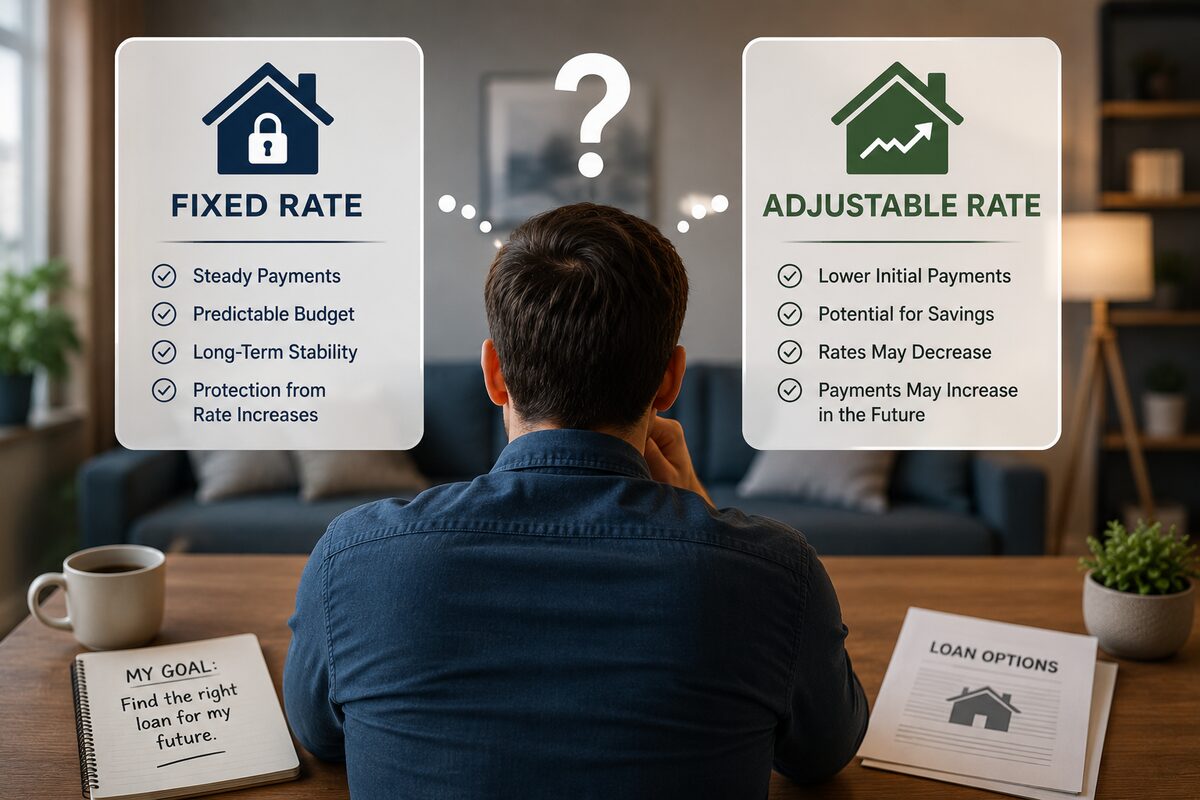
ARM vs Fixed: What Is a 5/6 ARM and When Does It Make Sense?
A 5/6 ARM carries an introductory rate for five years, then adjusts every six months. Learn how ARMs compare to fixed loans and when each makes sense.
Read more
How to Get Rid of PMI: Equity, Reappraisal, and Refinancing
Private mortgage insurance (PMI) on a conventional loan cancels automatically once your balance reaches 78% of the home's original value, but you don't have to wait that long. You can request removal at 20% equity, and if your home has appreciated, a reappraisal or refinance can eliminate it even sooner.
Read more
Gift Funds: The Rules for Down Payment Gifts
A family member can give you money for your down payment, and on most loan types the entire down payment can be a gift. The key rules: it has to be a true gift with no repayment expected, it must come from an acceptable source, and it has to be documented with a gift letter and a clear paper trail.
Read moreSeller Concessions: How Much Can the Seller Pay?
A seller concession is when the seller agrees to pay part of your closing costs as a term of the sale. It's a legitimate, common way to reduce your cash to close, and depending on the loan type and your down payment, a seller can contribute anywhere from 2% to 9% of the purchase price toward your costs.
Read moreWhat Credit Score Do You Need for Each Loan Type?
The minimum credit score depends entirely on the loan program: FHA goes as low as 500-580, VA and USDA have no federal minimum (lenders typically want 580-640), conventional generally starts around 620, and jumbo loans want 700 or higher. Here's the breakdown by program.
Read more