


Conventional Loans: The Gold Standard of Home Financing
Backed by Fannie Mae and Freddie Mac, conventional loans offer the most competitive rates, flexible terms, and the pathway that finances 70% of American home purchases.
2026 Conventional Loan Limits
Today’s 30-Year Fixed (Conventional) Rate
Conventional – Primary Residence
Rate Assumptions
30 year fixed, $300k loan amount, $400k value, purchase, FICO Credit Score 759, Zipcode 92867
APR & Disclosures
The Annual Percentage Rate (APR) shown reflects the cost of credit over the loan term, including applicable fees, and is based on the assumptions above. Your actual rate and APR depend on your credit profile, loan amount, property, occupancy, and other factors. For information purposes only and does not constitute a loan approval or commitment to lend. Rates are subject to change without notice.
What Is a Conventional Loan?
A conventional loan is any mortgage that isn't insured or guaranteed by the federal government. Unlike FHA loans (backed by the Federal Housing Administration), VA loans (guaranteed by the Department of Veterans Affairs), or USDA loans (backed by the U.S. Department of Agriculture), conventional loans rely on private mortgage insurance if you put less than 20% down — learn about removing PMI from a conventional loan once you build equity.
The term "conventional" refers to the loan conforming to guidelines established by Fannie Mae (Federal National Mortgage Association) and Freddie Mac (Federal Home Loan Mortgage Corporation)—two government-sponsored enterprises (GSEs) that don't lend money directly but purchase loans from lenders, creating what's known as the secondary mortgage market.
This secondary market is the engine that powers American homeownership. When a lender makes you a loan, they can sell it to Fannie Mae or Freddie Mac, immediately recouping their capital to make more loans. This creates virtually unlimited lending capacity and keeps mortgage rates lower than they would be if banks had to hold every loan on their books for 30 years.
The Power Behind Your Mortgage: Fannie Mae & Freddie Mac
Understanding the GSEs that make affordable homeownership possible
Fannie Mae
Est. 1938 • FNMA
Created during the Great Depression to expand the secondary mortgage market, Fannie Mae purchases loans from lenders and packages them into mortgage-backed securities (MBS). This frees up lender capital to make more loans while spreading risk among global investors.
Freddie Mac
Est. 1970 • FHLMC
Created to provide competition and expand the secondary market, Freddie Mac performs the same essential function as Fannie Mae—purchasing loans, securitizing them, and guaranteeing timely payment to investors. This dual-GSE structure keeps the market competitive.
Why This Matters to You
When your lender offers a "conforming" loan, they're following Fannie/Freddie guidelines because they plan to sell your loan on the secondary market. This is actually great for you: it means standardized underwriting (fair, consistent treatment), competitive rates (massive investor demand drives rates down), and reliable terms (no surprise changes). The GSE system processes approximately $10 trillion in mortgages—more than the GDP of every country except the U.S. and China.
Conventional 3%-Down Programs: HomeReady & Home Possible
You don't need 20% down to go conventional. These two low-down-payment programs let eligible first-time and lower-income buyers put down as little as 3%—with reduced mortgage insurance and flexible qualifying rules.
HomeReady®
Fannie Mae • 3% Down
Fannie Mae's HomeReady program is built for creditworthy buyers with low-to-moderate incomes. It allows just 3% down, accepts income from co-borrowers and boarders to help you qualify, and offers reduced private mortgage insurance that cancels once you reach 20% equity.
Home Possible®
Freddie Mac • 3% Down
Freddie Mac's Home Possible is the companion program with the same 3%-down advantage. It offers flexible sources for your down payment, reduced mortgage insurance for eligible borrowers, and options for buyers with limited credit history—making it a strong fit for first-time and repeat buyers alike.
Eligibility for both programs depends on income limits and area guidelines. Not sure which one fits your situation? Get pre-approved and I'll help you compare.
How the Secondary Market Keeps Your Rates Low
Imagine if your local bank had to hold your 30-year mortgage on their books for three decades. They'd have limited capital to lend, higher risk exposure, and would charge you much more to compensate. That was the reality before the secondary market existed.
Today's system works differently: Your lender originates your loan, then sells it to Fannie Mae or Freddie Mac (usually within days or weeks). The GSEs bundle thousands of similar loans into Mortgage-Backed Securities (MBS), which are sold to investors worldwide—pension funds, insurance companies, foreign governments, and individual investors.
These investors are willing to accept relatively low returns because the GSEs guarantee timely payment of principal and interest, even if borrowers default. This guarantee, combined with the liquidity of the MBS market, attracts trillions in investment capital that funds American mortgages at rates far below what a fragmented, local banking system could offer.

The Revolution in Home Financing
Click each card to see how conventional loans transformed mortgage lending from a local, arbitrary process into a fair, efficient national market.
Standardized Underwriting: Fair, Fast, and Consistent
Fannie Mae and Freddie Mac's underwriting guidelines ensure you're evaluated on objective criteria—not a loan officer's mood.
Minimum for conventional (740+ for best rates)
Maximum DTI ratio (up to 50% with strong factors)
As low as 3% for first-time buyers
Varies by loan type and property
The Automated Underwriting Advantage
Desktop Underwriter® (Fannie Mae)
DU analyzes your application against thousands of data points to provide an instant underwriting recommendation. It considers credit history, income stability, assets, and property details to determine eligibility and pricing adjustments.
- Instant decisions in seconds, not days
- Objective criteria eliminates bias
- May waive appraisal for strong files
Loan Product Advisor® (Freddie Mac)
LPA performs similar analysis with its own risk models. Having two competing AUS systems ensures innovation and prevents any single algorithm from dominating. Lenders can run both and choose the better result for your situation.
- Asset & Income Modeler reduces docs
- ACE+ PDR may waive income docs
- Competitive alternative ensures fair pricing
Real Conventional Loan Success Stories
See how conventional loans work for different buyer profiles

The Rodriguez Family
Maria and Carlos saved 5% while renting in Phoenix. With a 720 credit score, they qualified for a conventional loan at 5.5%. Their PMI of $178/month will drop off once they hit 20% equity—expected in 7 years with appreciation.
David & Sarah Chen
The Chens sold their starter home and rolled equity into a larger home. With 20% down and 780 credit, they avoided PMI entirely and locked in the best available rate—saving $250/month compared to a low-down-payment option.
Jennifer Martinez
Jennifer bought a rental duplex using a conventional loan—the only option since FHA/VA don't allow investment properties. With 25% down and strong rental income, she cash-flows $400/month after all expenses.
Why Conventional Loans Benefit Everyone
For Consumers
- Lower total costs: No upfront funding fees (VA charges 2.15%, FHA charges 1.75%), removable PMI, and the most competitive rates in the market.
- Flexibility: Primary homes, second and vacation homes, investment properties—conventional works for all. FHA and VA are primary residence only.
- Fair treatment: Standardized guidelines mean your approval depends on objective factors, not your relationship with a banker.
- Competition: Shop nationally among thousands of lenders all using the same guidelines—pure rate/service competition benefits you.
For the Economy
- Capital efficiency: The secondary market recycles capital instantly, allowing continuous lending regardless of local deposit levels.
- Risk distribution: MBS spread mortgage risk globally, preventing any single institution from becoming dangerously concentrated.
- 30-year fixed rate: This uniquely American product exists because the secondary market makes long-term fixed-rate lending viable. Not sure whether fixed or variable is right for you? See our guide to adjustable-rate mortgage basics.

How Much Home Can You Afford?
Use our calculator to estimate your conventional loan buying power based on income and debts.
Home Affordability Calculator
Discover how much house you can afford based on your income and debts
Car loans, credit cards, student loans, etc.
Lenders typically prefer ratios below 45%/45%
Conventional vs. Other Loan Types
| Feature | Conventional | FHA | VA |
|---|---|---|---|
| Min. Down Payment | 3% | 3.5% | 0% |
| Min. Credit Score | 620 | 580 | No minimum* |
| Upfront Fee | None | 1.75% UFMIP | 2.15% Funding Fee |
| Monthly Insurance | PMI (removable) | MIP (for life) | None |
| Investment Property | Yes ✓ | No | No |
| Second Home | Yes ✓ | No | No |
| 2026 Loan Limit | $832,750 | $541,287 | No limit |
*VA has no official minimum but most lenders require 620+
Deciding between the two most popular options? Our ultimate 2026 guide to conventional vs. FHA loans walks through real payment scenarios, mortgage-insurance math, and which loan wins at different credit scores and down payments.
Conventional financing can also help you buy a home for aging parents or an adult child at owner-occupied terms—see how the Family Opportunity Mortgage works. Buying a condo that doesn't meet Fannie/Freddie approval? Explore non-warrantable condo loan options.
Conventional Loan FAQs
What credit score do I need for a conventional loan?
Most lenders require a minimum credit score of 620 for conventional loans, though 740+ gets you the best rates. Unlike FHA loans (which accept 580+), conventional loans reward strong credit with lower costs—no mortgage insurance required at 20% down and better pricing overall.
What is the maximum loan amount for conventional loans in 2026?
For 2026, the conforming loan limit is $832,750 in most areas and up to $1,249,125 in high-cost areas like San Francisco, Los Angeles, and New York. These limits are set annually by FHFA and allow your loan to be purchased by Fannie Mae or Freddie Mac.
How much down payment do I need for a conventional loan?
Conventional loans require as little as 3% down for first-time buyers (Fannie Mae HomeReady, Freddie Mac Home Possible) or 5% for repeat buyers. However, putting 20% down eliminates PMI entirely, saving hundreds per month.
What is the difference between conforming and non-conforming loans?
Conforming loans meet Fannie Mae/Freddie Mac guidelines (including loan limits) and can be sold on the secondary market. Non-conforming loans (like jumbo loans) exceed these limits or guidelines and typically have higher rates because lenders keep them on their books.
Why are conventional loan rates often lower than other loan types?
Because Fannie Mae and Freddie Mac guarantee these loans, investors view them as low-risk investments. This massive secondary market demand allows lenders to offer lower rates. Additionally, there are no government funding fees like VA (2.15%) or FHA upfront MIP (1.75%).
Can I use a conventional loan for investment properties?
Yes! Unlike FHA and VA loans (primary residence only), conventional loans work for primary homes, second homes, and investment properties. Investment properties require 15-25% down and have slightly higher rates, but conventional is often the only realistic option for investors.
What is PMI and when can I remove it?
Private Mortgage Insurance (PMI) protects the lender if you default. It's required when putting less than 20% down but can be removed once you reach 20% equity. Under federal law (Homeowners Protection Act), PMI must automatically terminate at 22% equity.
How do Fannie Mae and Freddie Mac affect my mortgage?
They don't lend directly but buy loans from lenders, freeing up capital for more lending. Their standardized guidelines ensure you get consistent, fair treatment regardless of which lender you choose. They also set the conforming loan limits that determine maximum loan amounts.
Ready to Explore Your Conventional Loan Options?
Get pre-approved in as little as 24-48 hours. Compare rates, see your buying power, and take the first step toward homeownership.
Not sure if conventional is right? Ask Emmett →
Emmett Clark • NMLS #233747 • Licensed in 18 States
Conventional Loans by State
Emmett is licensed across 18 states. Explore conventional loans details, limits, and local programs for your state.
From the blog & learning center
Conventional Loans articles & guides

Deep Dive: Vacation Home Guide
Financing options and rules for buying a second or vacation home.
Read more
Rate-and-Term vs Cash-Out Refinance: Which One Do You Need?
A rate-and-term refinance changes your rate or term; a cash-out replaces your loan with a larger one for cash. Learn which one fits your goal.
Read more
When Does Refinancing Make Sense? How to Calculate Your Break-Even
Refinancing makes sense when monthly savings recover your closing costs before you sell. Divide costs by savings to find your break-even in months.
Read more
Refinance to Lower Your Payment or Pay Off Faster? A Net-Benefit Breakdown
Lowering your payment frees cash flow but costs more interest; paying off faster saves interest but tightens your budget. Here's how to choose.
Read more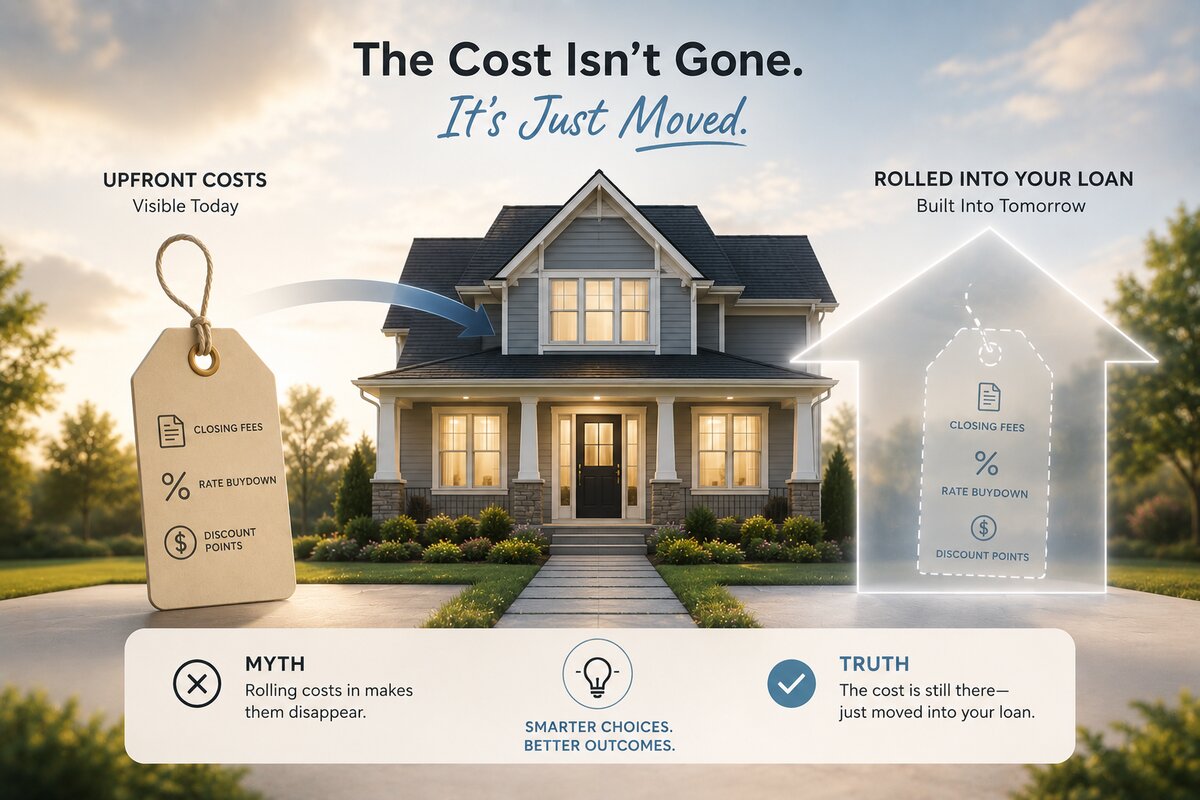
No-Closing-Cost Refinance: Is It Really Free?
A no-closing-cost refinance isn't free. The costs are paid through a higher rate or added to your balance. Learn when the trade is worth it.
Read more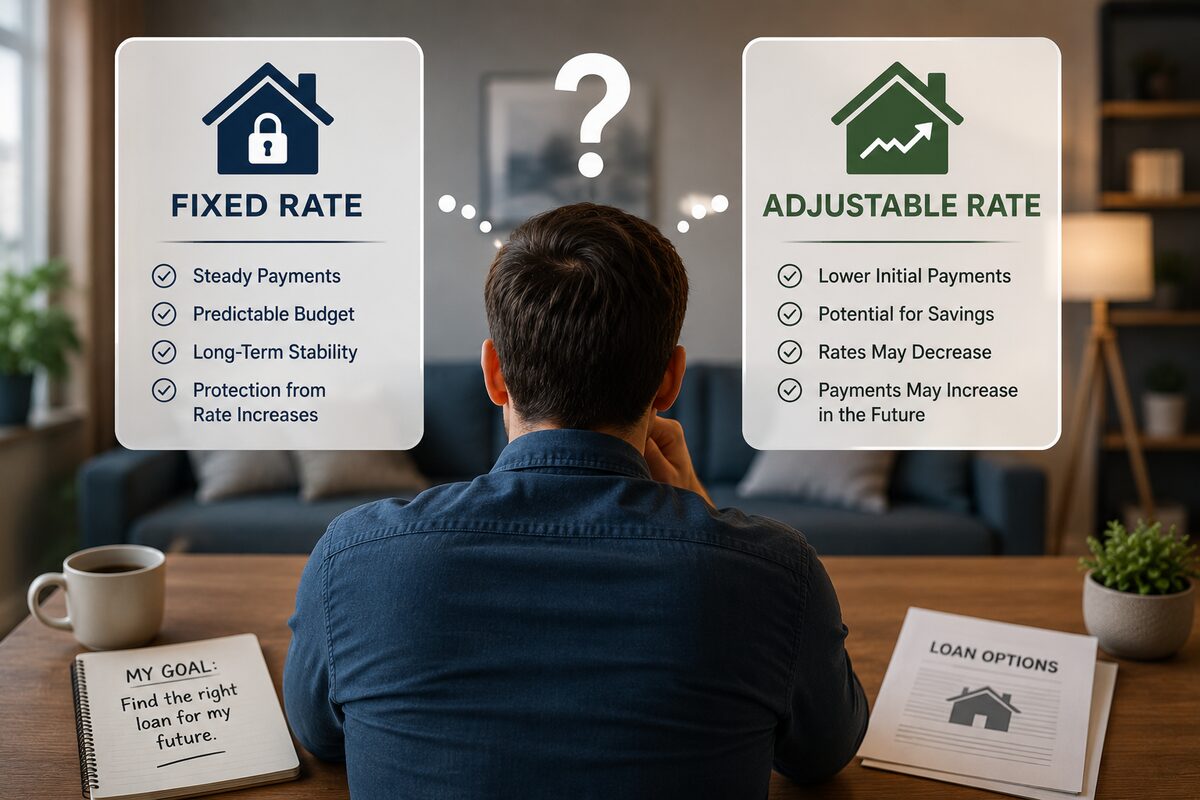
ARM vs Fixed: What Is a 5/6 ARM and When Does It Make Sense?
A 5/6 ARM carries an introductory rate for five years, then adjusts every six months. Learn how ARMs compare to fixed loans and when each makes sense.
Read more