Washington Conventional Loans 2026
Yes, Washington buyers can get a conventional loan with as little as 3% down, and its PMI is removable at 20% equity, unlike FHA's often-permanent mortgage insurance. King County's high conforming limit ($1,063,750) covers most Seattle-area homes without a jumbo loan.
Conventional loans offer Washington's strongest financing option for buyers with good credit. With limits up to $1,063,750 in Seattle metro and PMI removal at 20% equity, conventional financing covers most of Washington's housing market.
What are today's conventional loan rates in Washington?
Conventional rates in Washington update daily and are shown live below. If you start with PMI, it is not permanent, and you can plan ahead for how to cancel PMI once you reach 20% equity.
Today’s 30-Year Fixed (Conventional) Rate
Conventional – Primary Residence
Rate Assumptions
30 year fixed, $300k loan amount, $400k value, purchase, FICO Credit Score 759, Zipcode 95111
APR & Disclosures
The Annual Percentage Rate (APR) shown reflects the cost of credit over the loan term, including applicable fees, and is based on the assumptions above. Your actual rate and APR depend on your credit profile, loan amount, property, occupancy, and other factors. For information purposes only and does not constitute a loan approval or commitment to lend. Rates are subject to change without notice.
What are the conventional loan limits in Washington?
Conventional loans follow FHFA conforming limits. King, Snohomish, and Pierce counties qualify for high-cost limits.
| County / Metro Area | 2026 Limit (1-Unit) | Classification |
|---|---|---|
King (Seattle) | $1,063,750 | High-Cost |
Snohomish (Everett) | $1,063,750 | High-Cost |
Pierce (Tacoma) | $1,063,750 | High-Cost |
San Juan | $832,750 | Standard |
Clark (Vancouver) | $832,750 | Standard |
Spokane | $832,750 | Standard |
Thurston (Olympia) | $832,750 | Standard |
Kitsap (Bremerton) | $832,750 | Standard |
Benton (Tri-Cities) | $832,750 | Standard |
Whatcom (Bellingham) | $832,750 | Standard |
Note: These are single-unit limits. 2-4 unit properties have higher limits. Loans above these amounts require jumbo financing.
Why do Washington buyers choose conventional loans?
Washington buyers choose conventional financing for removable PMI, lower long-term cost with strong credit, fewer condo restrictions, and eligibility for second homes and investment properties. Buyers weighing the alternative can see how a Washington FHA loan handles credit and down payment differently.
PMI Removal
Unlike FHA, conventional PMI can be removed at 20% equity. With Washington's strong appreciation, many reach this faster than expected.
Lower Total Cost
For 700+ credit buyers, conventional typically beats FHA on total loan cost. No upfront mortgage insurance, lower rates available.
Condo Flexibility
Conventional loans have fewer condo restrictions than FHA. Most Seattle high-rises and townhome communities qualify.
Investment Property
Conventional financing works for second homes and investment properties. 15-25% down for non-primary residences.
No Income Tax Boost
Washington's no state income tax means more qualifying income. Tech workers especially benefit from higher take-home pay.
Flexible Down Payment
From 3% (Conventional 97) to 20%+. Choose the balance between cash preservation and monthly payment that works for you.
Should I choose conventional or FHA in Washington?
| Feature | Conventional | FHA |
|---|---|---|
| Min Credit Score | 620 | 580 |
| Min Down Payment | 3% | 3.5% |
| PMI Removal | Yes, at 20% | No (life of loan) |
| King County Limit | $1,063,750 | $1,063,750 |
| Upfront MI | None | 1.75% |
| Investment Property | Yes | No |
Verified as of July 2026 (FHFA/HUD)
Our Recommendation: We run a detailed comparison for every client. Generally, buyers with 700+ credit and 5%+ down save more with conventional. Lower credit or minimal savings often benefit from FHA's flexibility.
Washington Conventional Loan FAQs
What is the conventional loan limit in King County?
The 2026 conforming limit for King County is $1,063,750 for single-family homes. This covers most Seattle metro inventory. Homes above this require jumbo financing.
Can I put less than 20% down on a conventional loan?
Yes! Conventional loans start at 3% down with PMI. The PMI can be removed once you reach 20% equity, unlike FHA where it stays for the life of the loan.
What credit score gets the best conventional rates?
740+ credit scores qualify for the best rates. However, 700+ is typically sufficient for competitive pricing. We work with scores as low as 620.
Can I use conventional for a vacation home in Washington?
Yes, conventional loans work for second homes and investment properties. Expect 10-15% down for vacation homes and 15-25% for investment properties.
Is conventional better than FHA for Seattle condos?
Usually yes. Conventional has fewer condo restrictions, and most Seattle buildings qualify. We verify eligibility before you make an offer.
Get Your Conventional Quote
Connect with Emmett directly. Quick response, personalized guidance for your Washington home purchase.
Why Contact Emmett?
- ✓ Local Washington market expertise
- ✓ Access to 240+ wholesale lenders
- ✓ Same-day pre-qualification available
- ✓ No obligation, free consultation
Estimate Your Washington Monthly Payment
Washington's 2026 conforming loan limit is $1,063,750 for a single-unit home. Adjust the price, down payment, rate, and term to see your full monthly payment.
Monthly Payment Calculator
Calculate your estimated monthly mortgage payment including taxes, insurance, and HOA dues
Annual % of home price. Adjust in eighths (0.125%).
Annual % of home price. Adjust in eighths (0.125%).
Flat monthly homeowner association dues.
From the blog & learning center
Conventional Loan Guides & Articles

Deep Dive: Vacation Home Guide
Financing options and rules for buying a second or vacation home.
Read more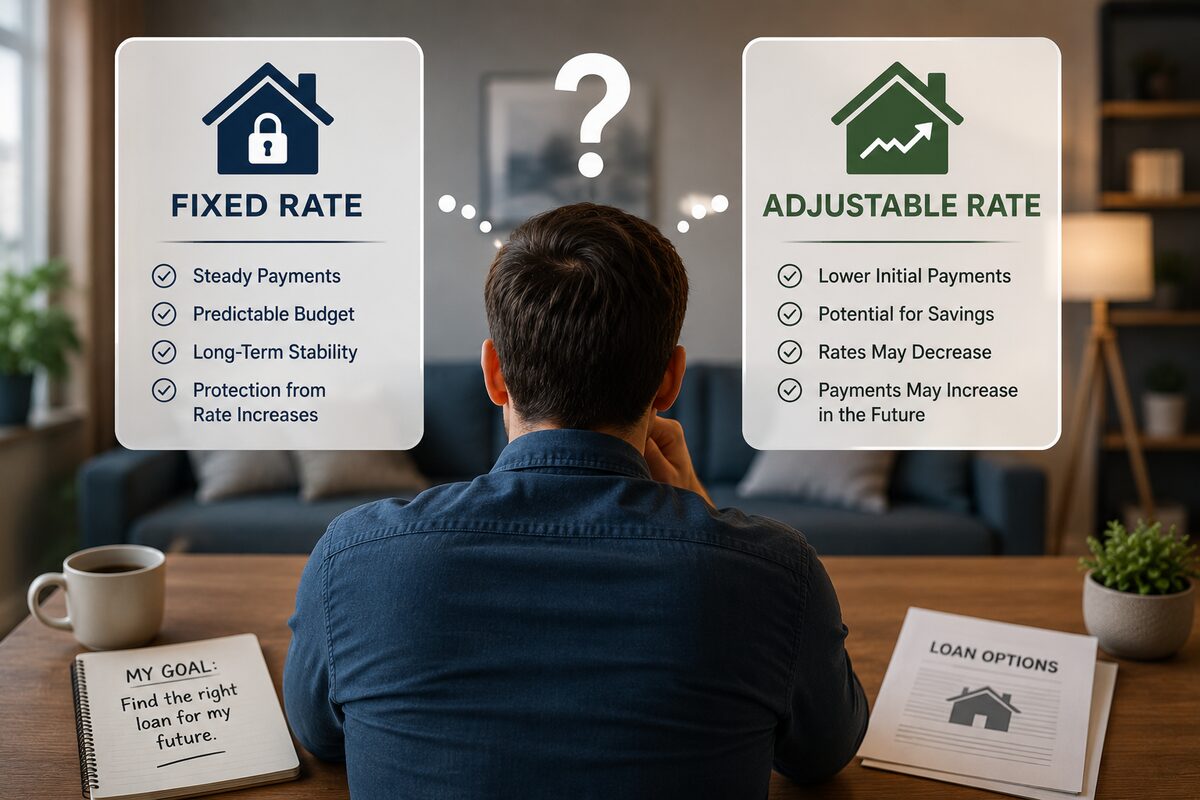
ARM vs Fixed: What Is a 5/6 ARM and When Does It Make Sense?
A 5/6 ARM carries an introductory rate for five years, then adjusts every six months. Learn how ARMs compare to fixed loans and when each makes sense.
Read more
How to Get Rid of PMI: Equity, Reappraisal, and Refinancing
Private mortgage insurance (PMI) on a conventional loan cancels automatically once your balance reaches 78% of the home's original value, but you don't have to wait that long. You can request removal at 20% equity, and if your home has appreciated, a reappraisal or refinance can eliminate it even sooner.
Read more
Gift Funds: The Rules for Down Payment Gifts
A family member can give you money for your down payment, and on most loan types the entire down payment can be a gift. The key rules: it has to be a true gift with no repayment expected, it must come from an acceptable source, and it has to be documented with a gift letter and a clear paper trail.
Read moreSeller Concessions: How Much Can the Seller Pay?
A seller concession is when the seller agrees to pay part of your closing costs as a term of the sale. It's a legitimate, common way to reduce your cash to close, and depending on the loan type and your down payment, a seller can contribute anywhere from 2% to 9% of the purchase price toward your costs.
Read moreWhat Credit Score Do You Need for Each Loan Type?
The minimum credit score depends entirely on the loan program: FHA goes as low as 500-580, VA and USDA have no federal minimum (lenders typically want 580-640), conventional generally starts around 620, and jumbo loans want 700 or higher. Here's the breakdown by program.
Read more