Virginia Conventional Loans 2026
Yes, Virginia buyers can get a conventional loan with as little as 3% down, and its PMI is removable at 20% equity, unlike FHA's often-permanent mortgage insurance. In high-cost Northern Virginia the conforming limit reaches well above the standard, so conventional financing covers most Commonwealth home prices without a jumbo loan.
Conventional mortgages are the most popular choice for Virginia homebuyers with strong credit. With conforming limits up to $1,249,125 in Northern Virginia and removable PMI, conventional loans offer flexibility and long-term value across the Commonwealth.
What are today's conventional loan rates in Virginia?
We publish conventional 30-year fixed rates daily. Here is today's rate for a Virginia conventional loan, updated automatically.
Today’s 30-Year Fixed (Conventional) Rate
Conventional – Primary Residence
Rate Assumptions
30 year fixed, $300k loan amount, $400k value, purchase, FICO Credit Score 759, Zipcode 95111
APR & Disclosures
The Annual Percentage Rate (APR) shown reflects the cost of credit over the loan term, including applicable fees, and is based on the assumptions above. Your actual rate and APR depend on your credit profile, loan amount, property, occupancy, and other factors. For information purposes only and does not constitute a loan approval or commitment to lend. Rates are subject to change without notice.
How do conventional loans work in Virginia?
Conventional loans in Virginia are mortgages not backed by the government that let you buy with as little as 3% down, with PMI you can remove once you reach 20% equity. Conventional mortgages, loans not backed by the federal government, are the most commonly used financing option in Virginia. Backed by Fannie Mae and Freddie Mac, these conforming loans offer competitive rates, flexible terms, and the unique advantage of PMI removal once you build 20% equity.
Virginia's diverse housing markets make conventional loans particularly attractive. In high-cost Northern Virginia, conforming loan limits reach $1,249,125, allowing buyers in Arlington, Fairfax, and Loudoun counties to finance million-dollar properties without jumping to jumbo loan requirements. For prices above those limits, jumbo financing for higher-priced Virginia homes takes over. Meanwhile, the standard limit of $832,750 covers the vast majority of homes in Richmond, Virginia Beach, and throughout the Commonwealth.
For Virginia buyers with good credit (740+), conventional loans typically offer the best available rates. Even with less-than-perfect credit, programs like Fannie Mae's HomeReady and Freddie Mac's Home Possible provide 3% down payment options with reduced mortgage insurance costs, and these programs work seamlessly with VHDA down payment assistance. Buyers who cannot meet conventional credit minimums may prefer Virginia's FHA loan option instead.
Virginia Conventional Loan Options
Standard Conventional
5-20%+ down • 620+ credit
- Best rates with 740+ score
- 20% down = No PMI
- No income limits
HomeReady (Fannie Mae)
3% down • 620+ credit
- Income limits apply
- Reduced MI rates
- Boarder income allowed
Home Possible (Freddie Mac)
3% down • 620+ credit
- Income limits by area
- Sweat equity allowed
- No first-time buyer req
Conventional 97
3% down • 620+ credit
- First-time buyers only
- Standard MI rates
- No income limits
2026 Virginia Conforming Loan Limits
| County/City | Conforming Limit | Classification |
|---|---|---|
| Arlington County | $1,249,125 | High-Cost |
| Fairfax County | $1,249,125 | High-Cost |
| Loudoun County | $1,249,125 | High-Cost |
| Prince William County | $1,249,125 | High-Cost |
| Alexandria City | $1,249,125 | High-Cost |
| Falls Church City | $1,249,125 | High-Cost |
| Virginia Beach | $832,750 | Standard |
| Richmond City | $832,750 | Standard |
| Henrico County | $832,750 | Standard |
| Roanoke City | $832,750 | Standard |
Verified as of July 2026 (FHFA/HUD)
VHDA Down Payment Assistance for Conventional Loans
Virginia Housing Development Authority (VHDA) programs work with conventional loans to reduce your upfront costs:
VHDA DPA Grant
- 2-2.5% of purchase price
- Forgivable after 3 years
- Works with HomeReady/Home Possible
- Income limits by county
VHDA Closing Cost Assistance
- Up to $6,000 toward closing costs
- Combine with DPA grant
- First-time & repeat buyers
- Low interest rate second lien
How does PMI work on a Virginia conventional loan?
PMI on a Virginia conventional loan is required only if you put less than 20% down, and unlike FHA mortgage insurance it can be removed once you reach 20% equity. If you put less than 20% down on a conventional loan, you'll pay PMI. Unlike FHA mortgage insurance, conventional PMI can be removed once you build equity, and our guide explains how to remove PMI faster:
PMI Cost
0.5-1.5% of loan amount annually, depending on credit score and LTV
Request Removal
Cancel PMI when you reach 20% equity based on original or current value
Auto Termination
PMI automatically drops at 22% equity based on original schedule
Where can you use a conventional loan in Virginia?
You can use a conventional loan anywhere in Virginia, with conforming limits that rise in high-cost Northern Virginia so financing covers most Commonwealth home prices without a jumbo loan. To weigh it against every alternative, review the full Virginia loan program lineup.
Northern Virginia
High home prices mean the $1,249,125 conforming limit is essential. Tech workers and federal employees in Arlington, Fairfax, and Loudoun often bring 10-20% down to reduce PMI costs. Strong credit profiles (740+) earn the best rates.
Central Virginia / Richmond
With median prices around $380,000, Richmond-area buyers have plenty of room under the $832,750 limit. First-time buyers often combine 3% down conventional with VHDA assistance for minimal out-of-pocket costs.
Hampton Roads
Military families not using VA loans often choose conventional financing. Virginia Beach and Chesapeake properties typically fall well under conforming limits, and rapid appreciation helps reach 20% equity quickly.
Southwest Virginia
Lower prices in Roanoke, Blacksburg, and Lynchburg mean conventional loans are accessible to many buyers. With homes in the $250,000-$350,000 range, even modest down payments create significant equity.
Virginia Conventional Loan FAQs
What is the conforming loan limit in Virginia for 2026?
The 2026 conforming loan limit in Virginia is $832,750 for most counties. High-cost Northern Virginia areas (Arlington, Fairfax, Loudoun, Prince William, Alexandria) have limits up to $1,249,125.
Can I combine VHDA down payment assistance with conventional loans?
Yes! VHDA offers down payment assistance grants of 2-2.5% of the purchase price that work with conventional loans. The Fannie Mae HomeReady and Freddie Mac Home Possible programs are also compatible with VHDA assistance.
When can I remove PMI on a Virginia conventional loan?
PMI can be removed once you reach 20% equity in your home. You can request removal at 20% equity or it's automatically terminated at 22% equity. Virginia's appreciating markets often allow PMI removal within 2-3 years of purchase.
What credit score do I need for a conventional loan in Virginia?
Conventional loans in Virginia typically require a 620 minimum credit score, though 740+ scores get the best rates. Some 3% down programs accept 620+ scores with income limits or first-time buyer status.
What's the minimum down payment for a conventional loan in Virginia?
Conventional loans in Virginia require as little as 3% down for first-time buyers (Fannie Mae HomeReady, Freddie Mac Home Possible) or 5% for other qualified borrowers. Putting 20% down eliminates PMI entirely.

Emmett Clark
NMLS #233747 | 20+ Years Experience
"Conventional loans offer Virginia buyers the best rates and most flexibility, especially when you can put 20% down or plan to build equity quickly. I help clients throughout the Commonwealth find the right conventional product, whether that's a 3% down first-time buyer loan in Richmond or a high-balance loan in McLean."
Get Your Conventional Loans Quote
Connect with Emmett directly. Quick response, personalized guidance for your Virginia home purchase.
Why Contact Emmett?
- ✓ Local Virginia market expertise
- ✓ Access to 240+ wholesale lenders
- ✓ Same-day pre-qualification available
- ✓ No obligation, free consultation
Explore Other Virginia Loan Options
Estimate Your Virginia Monthly Payment
Virginia's 2026 conforming loan limit is $1,249,125 for a single-unit home. Adjust the price, down payment, rate, and term to see your full monthly payment.
Monthly Payment Calculator
Calculate your estimated monthly mortgage payment including taxes, insurance, and HOA dues
Annual % of home price. Adjust in eighths (0.125%).
Annual % of home price. Adjust in eighths (0.125%).
Flat monthly homeowner association dues.
From the blog & learning center
Conventional Loan Guides & Articles

Deep Dive: Vacation Home Guide
Financing options and rules for buying a second or vacation home.
Read more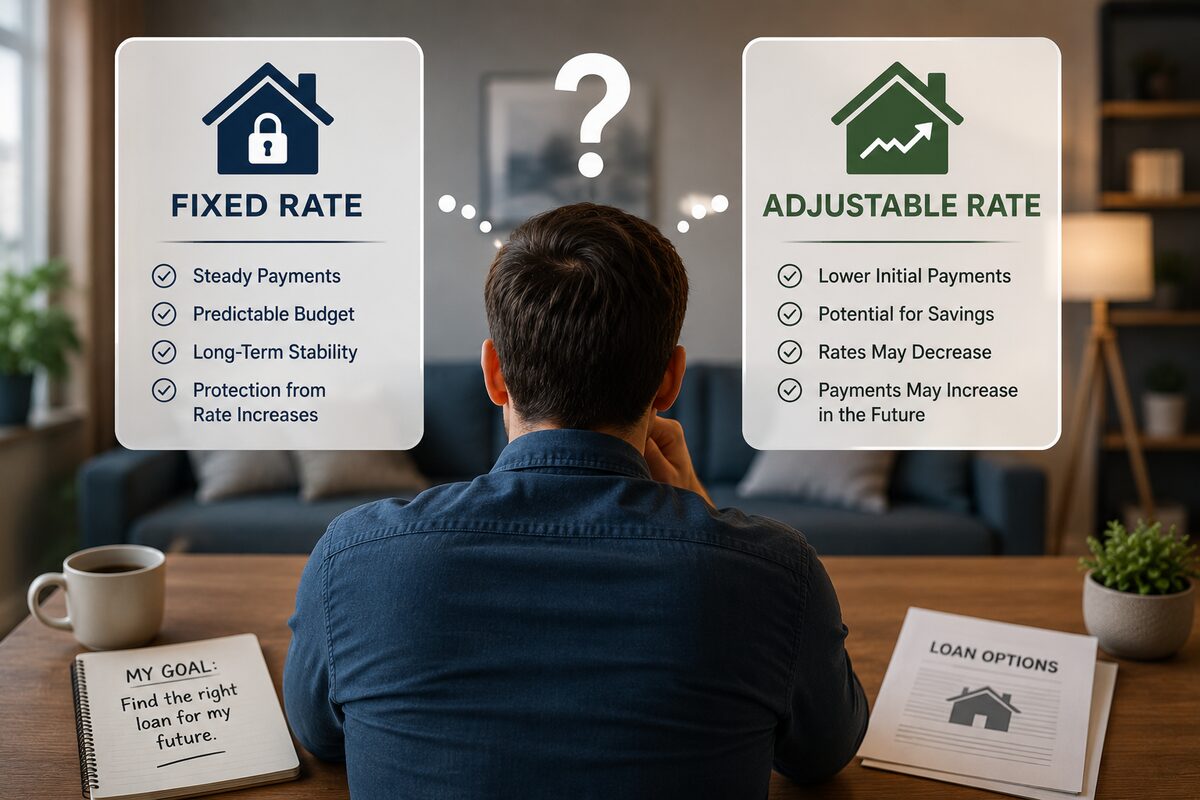
ARM vs Fixed: What Is a 5/6 ARM and When Does It Make Sense?
A 5/6 ARM carries an introductory rate for five years, then adjusts every six months. Learn how ARMs compare to fixed loans and when each makes sense.
Read more
How to Get Rid of PMI: Equity, Reappraisal, and Refinancing
Private mortgage insurance (PMI) on a conventional loan cancels automatically once your balance reaches 78% of the home's original value, but you don't have to wait that long. You can request removal at 20% equity, and if your home has appreciated, a reappraisal or refinance can eliminate it even sooner.
Read more
Gift Funds: The Rules for Down Payment Gifts
A family member can give you money for your down payment, and on most loan types the entire down payment can be a gift. The key rules: it has to be a true gift with no repayment expected, it must come from an acceptable source, and it has to be documented with a gift letter and a clear paper trail.
Read moreSeller Concessions: How Much Can the Seller Pay?
A seller concession is when the seller agrees to pay part of your closing costs as a term of the sale. It's a legitimate, common way to reduce your cash to close, and depending on the loan type and your down payment, a seller can contribute anywhere from 2% to 9% of the purchase price toward your costs.
Read moreWhat Credit Score Do You Need for Each Loan Type?
The minimum credit score depends entirely on the loan program: FHA goes as low as 500-580, VA and USDA have no federal minimum (lenders typically want 580-640), conventional generally starts around 620, and jumbo loans want 700 or higher. Here's the breakdown by program.
Read more