Yes. Missouri FHA buyers can put as little as 3.5% down, and MHDC's 4% forgivable assistance can cover that entire amount. FHA works with credit scores from 580+, has a uniform $541,287 limit across all 114 counties, and pairs with state DPA programs to get Missouri families into homes with near-zero cash outlay. Learn how FHA loans work nationally or explore manual underwriting options for challenging credit profiles.
From Kansas City's resurgent neighborhoods to St. Louis's affordable market, FHA financing unlocks homeownership across the Show-Me State. Pair FHA's 3.5% down with MHDC's 4% forgivable assistance, and move into your Missouri home with near-zero out-of-pocket investment.

Emmett Clark
NMLS #233747 | FHA Loan Specialist
Missouri's twin-anchor economy — Kansas City in the west, St. Louis in the east — creates two distinct yet equally FHA-friendly housing markets, connected by a corridor of affordable communities that make the Show-Me State one of America's best values for FHA homebuyers.
FHA Limit (All Counties)
$541,287
Uniform statewide — no high-cost areas
MO Median Price
~$281,400
6.3% annual appreciation
Min. Down Payment
3.5%
~$9,850 on median home
MHDC DPA
4% Forgivable
Forgiven after 10 years
Missouri's uniform $541,287 FHA limit across all 114 counties (plus the independent city of St. Louis) simplifies the lending equation for every buyer in the state. With a statewide median around $281,400 and 6.3% year-over-year appreciation, the typical Missouri purchase sits well below FHA's ceiling — leaving substantial headroom even in premium neighborhoods of Clayton, Brookside, and the Country Club Plaza corridor.
The Missouri Housing Development Commission (MHDC) amplifies FHA's accessibility through two powerful programs. The Next Step program — available to both first-time and repeat buyers — provides a second loan equal to 4% of the total mortgage amount, 100% forgivable after 10 years. The forgiveness schedule begins gradually after year five, with 1/60th forgiven each month until full forgiveness at year ten. On a $270,000 FHA loan, that's approximately $10,800 in forgivable assistance — more than covering the 3.5% down payment of $9,450. The First Place program targets first-time buyers and veterans with similarly affordable fixed rates and DPA options.
Missouri's property tax environment further strengthens the FHA equation. The statewide effective rate averages approximately 0.85%, though this varies significantly — from Wright County's 0.34% to St. Louis County's 1.14%. For FHA buyers in the Kansas City suburbs (Jackson County at 1.11%) or St. Louis metro (St. Louis County at 1.14%), property taxes run higher than the state average but remain moderate by national standards. Rural Missouri buyers benefit from some of the nation's lowest property tax rates.

Jackson, Clay, Platte & Cass counties: ~$190,000-$320,000 median range
Kansas City's FHA market benefits from a resurgent urban core and expanding suburbs. The Westport and Crossroads districts have transformed from industrial corridors into walkable neighborhoods with condos and townhomes from $200,000-$380,000 — well within FHA limits. The Waldo-Brookside corridor offers established bungalows and Craftsman homes from $250,000-$450,000, while Northland Kansas City (Clay and Platte counties) provides newer suburban construction from $220,000-$380,000.
Kansas City's eastern suburbs — Lee's Summit, Blue Springs, and Independence — offer some of the metro's best FHA value with medians from $200,000-$310,000. The Cerner (now Oracle Health) campus in south Kansas City, Sprint/T-Mobile's Overland Park headquarters (Kansas side), and the Hallmark corporate campus in Crown Center all generate steady professional employment that pairs well with FHA's income documentation requirements.
St. Louis City & County, St. Charles, Jefferson counties: ~$250,000 median
St. Louis's $250,000 median makes it one of America's most FHA-accessible major metros. The city's distinctive municipality system — 88 individual cities within St. Louis County — creates hyper-local markets with varying price points. Tower Grove South, Soulard, and Lafayette Square in St. Louis City offer beautifully renovated brick row houses and Victorian homes from $180,000-$400,000. The Central West End — anchored by Barnes-Jewish Hospital and Washington University Medical Center — provides walkable urban living from $200,000-$500,000.
St. Charles County to the west offers Missouri's fastest suburban growth with new construction from $280,000-$450,000. Jefferson County to the south provides more affordable options from $180,000-$300,000. The entire St. Louis metro benefits from major employers including Boeing Defense, Bayer/Monsanto, Emerson Electric, Edward Jones, and the massive BJC Healthcare system — all providing stable W-2 employment documentation that FHA underwriting rewards.
Greene, Boone & surrounding counties: university towns with strong value
Springfield (Greene County) — Missouri's third-largest city and the "Queen City of the Ozarks" — offers FHA buyers exceptional value with medians around $220,000-$260,000. The city's healthcare sector (CoxHealth, Mercy Springfield), Bass Pro Shops headquarters, and Missouri State/Drury University campuses drive steady housing demand. South Springfield and Phelps Grove neighborhoods provide established homes from $150,000-$290,000.
Columbia (Boone County) — home to the University of Missouri's 30,000+ students and Stephens College — features a market from $200,000-$340,000 where university employment provides the stable income documentation FHA underwriting values. The North Columbia and South Columbia corridors offer family neighborhoods specifically designed for FHA-range pricing.
First-time buyer purchasing $280,000 home in Lee's Summit with FHA + MHDC Next Step:
Monthly payment on $270,200 FHA loan at 6.5%:
MHDC's forgivable structure means no second mortgage payment during the forgiveness period — unlike repayable DPA programs that add monthly obligations.
Zero down for Fort Leonard Wood, Whiteman AFB, and all Missouri veterans.
$832,750 conforming limit with PMI removal. Ideal for 680+ credit with 5%+ down.
Zero down in eligible rural areas covering 96% of Missouri land.
Above $832,750 for Clayton, Ladue, Brookside, and KC/STL premium markets.
Full-service brokerage with multiple lender access across all 114 Missouri counties.
Start with a verified pre-approval for competitive Missouri home offers.
FHA Down Payment Grant
In addition to MHDC programs
A grant covering 2% or 3.5% of the purchase price can be applied toward your FHA down payment. This is a true grant with no repayment, no second lien, and no income cap.
FHA – Primary Residence
30 year fixed, $300k loan amount, $400k value, purchase, FICO Credit Score 759, Zipcode 95111
The Annual Percentage Rate (APR) shown reflects the cost of credit over the loan term, including applicable fees, and is based on the assumptions above. Your actual rate and APR depend on your credit profile, loan amount, property, occupancy, and other factors. For information purposes only and does not constitute a loan approval or commitment to lend. Rates are subject to change without notice.
Connect with Emmett directly. Quick response, personalized guidance for your Missouri home purchase.
See your complete FHA payment—including both parts of mortgage insurance—and how your down payment changes the math over time.
An FHA payment has a piece conventional and VA loans don't: mortgage insurance, and it comes in two parts. The upfront premium is a one-time charge of a percentage of your loan amount, almost always rolled into the loan rather than paid at closing, which is why the total loan above can exceed your purchase price. The annual premium is charged monthly and appears as its own line in the breakdown.
Here's the part that changes the math over time. If you put less than 10% down, FHA mortgage insurance stays on the loan for as long as you have it. It doesn't fall off at 20% equity the way conventional PMI does. If you put 10% or more down, it drops off after 11 years.
That's a meaningful long-term difference, and it's worth modeling both ways above if you have the savings to reach 10%. It also means FHA isn't automatically the cheaper option just because the down payment is lower. For a buyer with solid credit and some savings, a conventional loan with removable PMI often costs less over the years you actually hold the loan, even though it asks for more up front. I run that comparison for every borrower who could qualify either way, because the right answer genuinely differs by situation.
FHA limits vary county by county, and they're lower than conforming limits in most places. If your loan amount exceeds your county's FHA limit, FHA isn't available for that purchase and you'd be looking at conventional or jumbo financing. The calculator flags this automatically when it happens.
It covers principal, interest, mortgage insurance, property taxes, homeowners insurance, and HOA dues. It doesn't include title, escrow, appraisal, recording, or prepaid costs, which vary by state and transaction, and it uses the rate you enter rather than one you've been quoted. Use it for the monthly number, then let me run your actual scenario.
From the blog & learning center

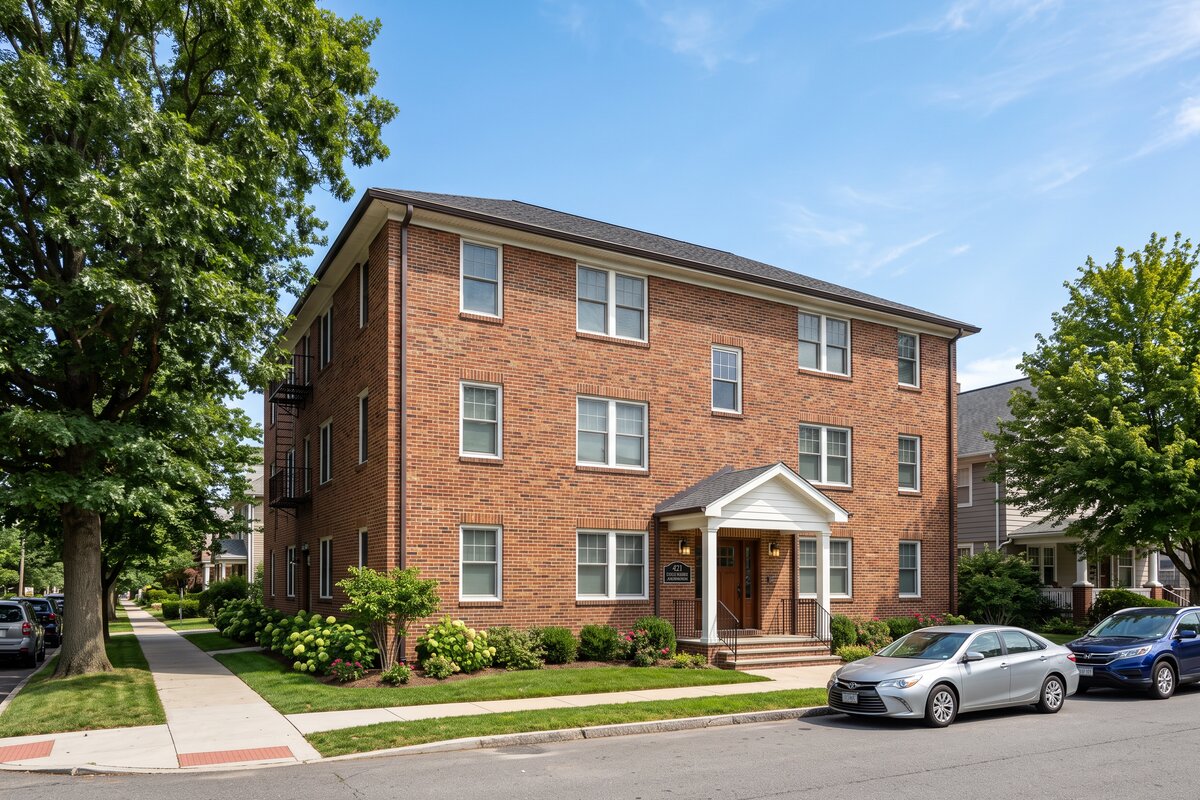
Use FHA financing to buy a 2-4 unit property and offset your payment.
Read more
If your condo loan was denied because of the HOA project itself, not your credit, FHA Single Unit Approval may still get you to closing. Here is how it works.
Read more
Buying after divorce means untangling the old mortgage, documenting support income, and qualifying on your own. Here is how to prepare and what lenders look at.
Read more
Only a small number of Hawaii condos are FHA-approved, so you must confirm a unit qualifies before you fall in love with it. Here is how FHA condo approval works in Hawaii.
Read more
The FHA streamline refinance lowers your rate with no appraisal, no income docs, and often no credit check. You may also get part of your upfront MIP back. Here are the 2026 rules.
Read more
No. FHA financing caps at 4 units. A 5-unit-or-larger building is commercial and needs different financing. Here is why, and what to use instead.
Read more