Oregon Conventional Loans 2026
Uniform $832,750 conforming limit across all 36 Oregon counties. From Portland's tech corridor to Bend's mountain communities, conventional financing offers removable PMI, flexible terms, and the purchasing power to compete in Oregon's dynamic real estate market.
💬 Prefer to text? (877) 600-1776
Conventional Lending in Oregon's Premium Housing Market
Oregon's housing market — with a statewide median approaching $507,000 and markets like Bend exceeding $775,000 — creates an environment where the $832,750 conforming loan limit is not just relevant but essential. Unlike FHA loans where Oregon's limits vary dramatically by county ($541,287 to $762,450), the conventional limit provides a uniform $832,750 ceiling across all 36 counties. This consistency simplifies planning and ensures that even in Portland's hottest neighborhoods or Bend's resort market, conforming conventional financing remains available for most transactions.
Conventional loans have gained particular importance in Oregon due to the state's competitive real estate market. In multiple-offer situations — common in Portland, Beaverton, and Hillsboro — conventional pre-approvals are sometimes perceived more favorably by sellers. Conventional appraisal requirements are also less stringent than FHA, which matters in Oregon's aging housing stock where some properties may not meet FHA's minimum property standards.
What makes conventional lending in Oregon especially compelling is the OHCS HFA Preferred and HFA Advantage products — specifically designed as conventional loan options with reduced mortgage insurance rates (often 25-50% lower than standard PMI) and compatibility with Flex Lending down payment assistance. This creates a hybrid product that combines conventional flexibility with state-supported affordability.
PMI Strategy for Oregon Markets
Private mortgage insurance is the conventional loan feature that often determines whether it's the right choice over FHA financing. In Oregon, where appreciation trends are strong, PMI strategy requires market-specific analysis:
Portland Metro: 4-5 Year PMI Removal
Portland's steady 3-5% annual appreciation means buyers who start with 5% down can reach 80% LTV within approximately 4-5 years. On a $550,000 Portland purchase with 5% down, PMI typically costs $175-$275/month. At 4% annual appreciation, your home reaches ~$670,000 in five years while the loan balance decreases to ~$490,000 — a 73% LTV qualifying for PMI removal. Cumulative savings vs. permanent FHA MIP can exceed $15,000 over the remaining term.
Bend: Accelerated 2-3 Year Timeline
Bend's stronger 5-8% annual appreciation creates the fastest PMI removal in Oregon. A $700,000 purchase with 10% down could see the home exceed $875,000 within three years at 7% appreciation, pushing LTV below 72% — well past PMI cancellation. This rapid equity makes conventional financing with PMI strategically sound for Bend buyers.
Willamette Valley: Steady 5-6 Year Growth
Salem, Eugene, and mid-valley communities appreciate at 2-4% annually — slower than Portland or Bend but sufficient for PMI removal within 5-6 years at 5% down. Lower entry prices ($400,000-$480,000) mean lower absolute PMI costs, making the monthly impact less significant while equity builds steadily.
OHCS HFA Programs: Reduced PMI from Day One
Oregon's OHCS HFA Preferred and HFA Advantage conventional products feature permanently reduced mortgage insurance rates — often 25-50% lower than standard PMI. On a $500,000 Portland purchase with 3% down:
Standard Conventional PMI
~$300/month
OHCS HFA Program PMI
~$150-$200/month (save $100-$150/mo)
Available to buyers meeting income limits (typically 80-100% AMI) and combines with OHCS Flex Lending DPA. Total savings over the PMI period often reach $5,000-$15,000.
Conventional vs. FHA: Oregon-Specific Comparison
Oregon's unique FHA county-limit system creates interesting dynamics. In Portland, the FHA limit ($701,500) is $131,250 below conventional ($832,750), meaning properties in the $701,500-$832,750 range are only accessible through conventional or VA loans.
| Feature | Conventional | FHA |
|---|---|---|
| Oregon Loan Limit | $832,750 (all counties) | $541,287–$762,450 |
| Min Down Payment | 3% (first-time) | 3.5% |
| Credit Score Minimum | 620 | 580 |
| Mortgage Insurance | Cancels at 80% LTV | Life of loan (most) |
| OHCS Compatible | HFA Preferred/Advantage | Flex Lending |
| Second Home Eligible | Yes (10% down) | No |
| Best For | 720+ credit, equity-focused | 580–679 credit, low savings |
Conventional Loan Markets Across Oregon
Portland Metro: Tech Sector & Premium Properties
Portland's concentration of tech professionals — Intel engineers in Hillsboro, Nike designers in Beaverton, software developers in Portland proper — creates a natural conventional buyer base with strong credit and savings. The $832,750 limit covers the vast majority of metro transactions, with only Lake Oswego's premium properties and West Hills estates requiring jumbo financing. Washington County's semiconductor expansion (Intel CHIPS Act investments) drives new construction in the $550,000-$750,000 range — ideal for conventional financing with clean appraisals. Oregon's no-sales-tax advantage further stretches purchasing power.
Bend & Central Oregon: Primary & Second Homes
Conventional loans serve dual purposes in Central Oregon: primary residence financing and second-home loans for Portland-area buyers wanting a Bend retreat. Second-home financing (only available through conventional) requires 10% down. Many Portland tech workers purchase in Bend, Sunriver, or Sisters before eventually transitioning to full-time Central Oregon residency. The $832,750 limit captures a significant portion of Bend's market despite the elevated median.
Eugene-Springfield & Salem-Keizer
The Eugene-Springfield market benefits from University of Oregon and PeaceHealth employment. Conventional loans serve the investor market (university-area rentals require 15-20% down). Salem's state government employment provides the income stability conventional underwriters value most, and Keizer's newer suburban developments sail through conventional appraisals. Coburg attracts buyers seeking larger lots within commuting distance.
Oregon Conventional Loan Considerations
No Sales Tax Advantage
Oregon's lack of state sales tax effectively increases disposable income vs. neighboring states. A household spending $50,000/year on taxable goods saves $3,250-$5,250/year compared to Washington (6.5-10.5% sales tax) — money that can accelerate PMI removal.
Property Tax Predictability
Oregon's Measure 50 caps assessed value growth at 3% annually. Portland-area buyers budget ~1.08% (Multnomah County) while Bend/Deschutes buyers benefit from a lower 0.59% rate. These county-specific rates directly impact DTI ratios and purchasing power.
Older Housing Stock
Portland's inner eastside, Eugene's university area, and Salem's historic districts feature 1920s-1960s homes. Conventional appraisals are more lenient than FHA regarding property condition, but oil tank decommissioning (common in Portland) and knob-and-tube wiring still factor in.
Self-Employed Buyers
Portland's entrepreneur-heavy economy (craft breweries, creative agencies, tech startups) generates significant conventional demand. Standard DTI of 45% with compensating factors. Two years of tax returns required. For non-traditional income, explore jumbo programs with bank-statement qualification.
"As a software engineer at Intel in Hillsboro, I had a 780 credit score and 10% saved. Emmett showed me the OHCS HFA Preferred program — my PMI was literally half what my credit union quoted. Closed on a $625,000 home in Orenco Station with $62,500 down and PMI at just $95/month instead of $190."
— J. Chen
Hillsboro, OR — OHCS HFA Preferred Conventional Purchase
Helpful Resources for Oregon Buyers
Oregon Conventional Loan FAQs
What is the conventional loan limit in Oregon for 2026?
The conforming loan limit for conventional mortgages in Oregon is $832,750 for all 36 counties. This uniform limit applies statewide regardless of whether you're purchasing in Portland, Bend, Salem, Eugene, or rural Oregon. Loans exceeding $832,750 require jumbo financing.
How much do I need for a down payment on a conventional loan in Oregon?
Conventional loans in Oregon require as little as 3% down for first-time buyers through Fannie Mae HomeReady or Freddie Mac Home Possible. Standard conventional loans require 5% minimum. A 20% down payment eliminates PMI. OHCS Flex Lending can provide 4-5% of your loan amount toward the down payment.
When can I remove PMI on my Oregon conventional loan?
PMI automatically cancels when your loan balance reaches 78% of the original appraised value, or you can request removal at 80% LTV. In Oregon's appreciating markets like Portland (3-5% annual) and Bend (5-8% annual), many buyers reach 80% LTV through appreciation within 3-5 years, even with minimal initial down payment.
Is a conventional loan or FHA loan better for Oregon homebuyers?
Oregon buyers with 720+ credit scores and 5%+ down often find conventional loans cheaper due to removable PMI. FHA's 3.5% down and more flexible credit requirements benefit buyers with lower scores. In Portland, conventional's $832,750 limit provides $131,250 more purchasing power than FHA's $701,500 limit — important for the metro's higher-end properties.
What are OHCS HFA Preferred and HFA Advantage programs?
These are conventional loan products specifically designed for Oregon buyers with reduced mortgage insurance rates — often 25-50% lower than standard PMI. They're available through OHCS to buyers meeting income limits (typically 80-100% AMI) and combine with Flex Lending DPA. On a $500,000 Portland purchase, this can save $100-$150/month in PMI costs.
Can I use a conventional loan for a second home in Bend?
Yes. Second-home financing is only available through conventional programs (not FHA or VA) and requires minimum 10% down with slightly higher rates. Many Portland tech workers use conventional second-home loans to purchase in Bend, Sunriver, or Sisters before eventually transitioning to full-time Central Oregon residency.

Emmett Clark
NMLS #233747 | 20+ Years Experience
"Oregon's conventional market rewards strategy — from OHCS HFA programs that slash PMI by half to the second-home financing that connects Portland professionals with Bend's mountain lifestyle. I model both conventional and FHA scenarios for every Oregon buyer to identify the optimal long-term choice."
Get Your Conventional Loans Quote
Connect with Emmett directly. Quick response, personalized guidance for your Oregon home purchase.
Why Contact Emmett?
- ✓ Local Oregon market expertise
- ✓ Access to 240+ wholesale lenders
- ✓ Same-day pre-qualification available
- ✓ No obligation, free consultation
Explore Other Oregon Loan Options
From the blog & learning center
Conventional Loan Guides & Articles

Deep Dive: Vacation Home Guide
Financing options and rules for buying a second or vacation home.
Read more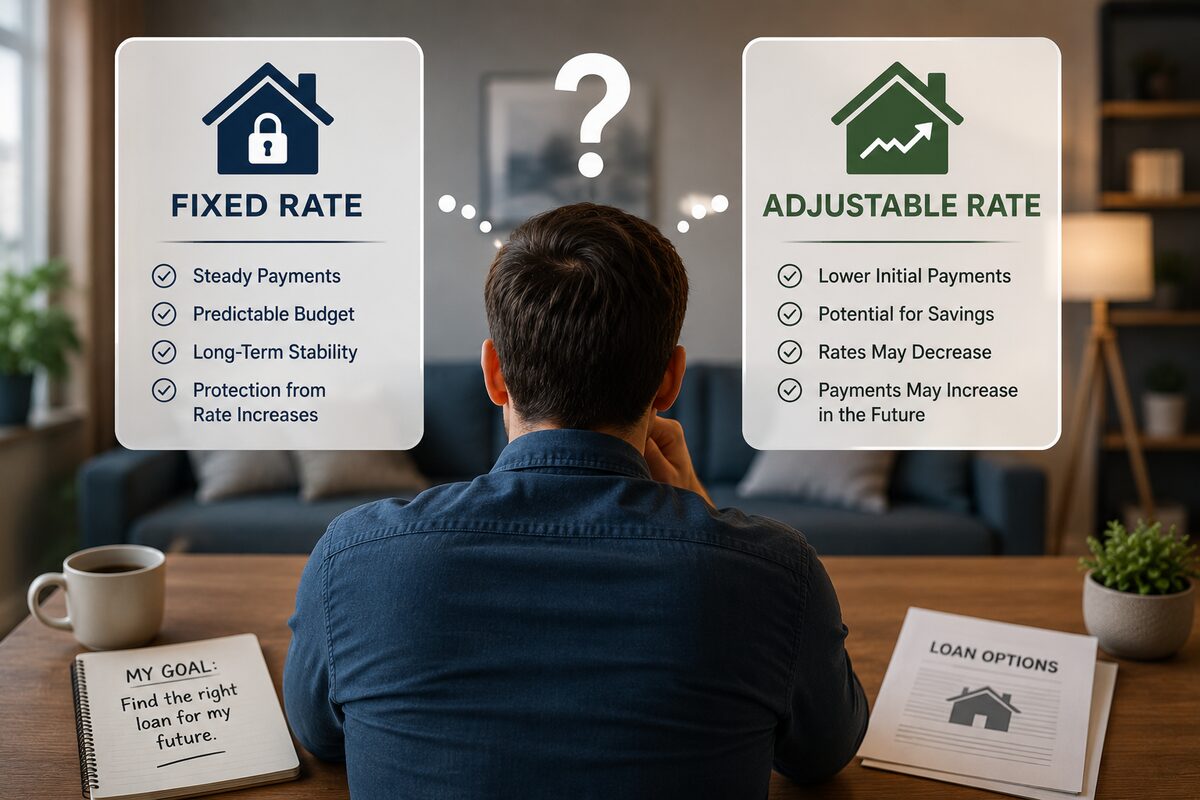
ARM vs Fixed: What Is a 5/6 ARM and When Does It Make Sense?
A 5/6 ARM carries an introductory rate for five years, then adjusts every six months. Learn how ARMs compare to fixed loans and when each makes sense.
Read more
How to Get Rid of PMI: Equity, Reappraisal, and Refinancing
Private mortgage insurance (PMI) on a conventional loan cancels automatically once your balance reaches 78% of the home's original value, but you don't have to wait that long. You can request removal at 20% equity, and if your home has appreciated, a reappraisal or refinance can eliminate it even sooner.
Read more
Gift Funds: The Rules for Down Payment Gifts
A family member can give you money for your down payment, and on most loan types the entire down payment can be a gift. The key rules: it has to be a true gift with no repayment expected, it must come from an acceptable source, and it has to be documented with a gift letter and a clear paper trail.
Read moreSeller Concessions: How Much Can the Seller Pay?
A seller concession is when the seller agrees to pay part of your closing costs as a term of the sale. It's a legitimate, common way to reduce your cash to close, and depending on the loan type and your down payment, a seller can contribute anywhere from 2% to 9% of the purchase price toward your costs.
Read moreWhat Credit Score Do You Need for Each Loan Type?
The minimum credit score depends entirely on the loan program: FHA goes as low as 500-580, VA and USDA have no federal minimum (lenders typically want 580-640), conventional generally starts around 620, and jumbo loans want 700 or higher. Here's the breakdown by program.
Read more